What’s the best living room layout?
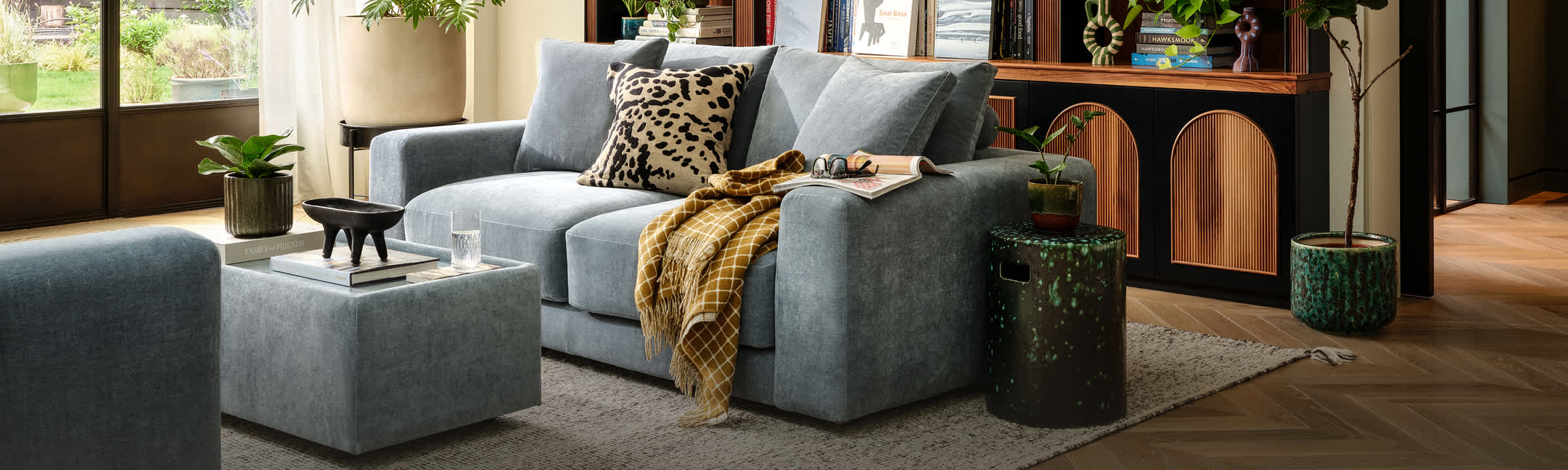
The beauty of living room décor lies in its versatility and how it reflects your style, meaning there is no single ‘best’ layout. However, when choosing the right living room layout for your space, we recommend focusing on proportion, form, and functionality.
In this guide, we'll explore six practical living room layout ideas to help you find the arrangement that works for your home. Whether you have a large, open-plan space or a smaller, cosier lounge, these tips will help you create an incredibly inviting lounge.
For Julia Bilotta, Creative Stylist at Sofology, it’s all about understanding how you want to live in your space and arranging your furniture accordingly, not following strict rules that don’t work for your home. “The best living room layout is one that encourages connection, provides comfort, and makes everyday moments feel a little more special.”
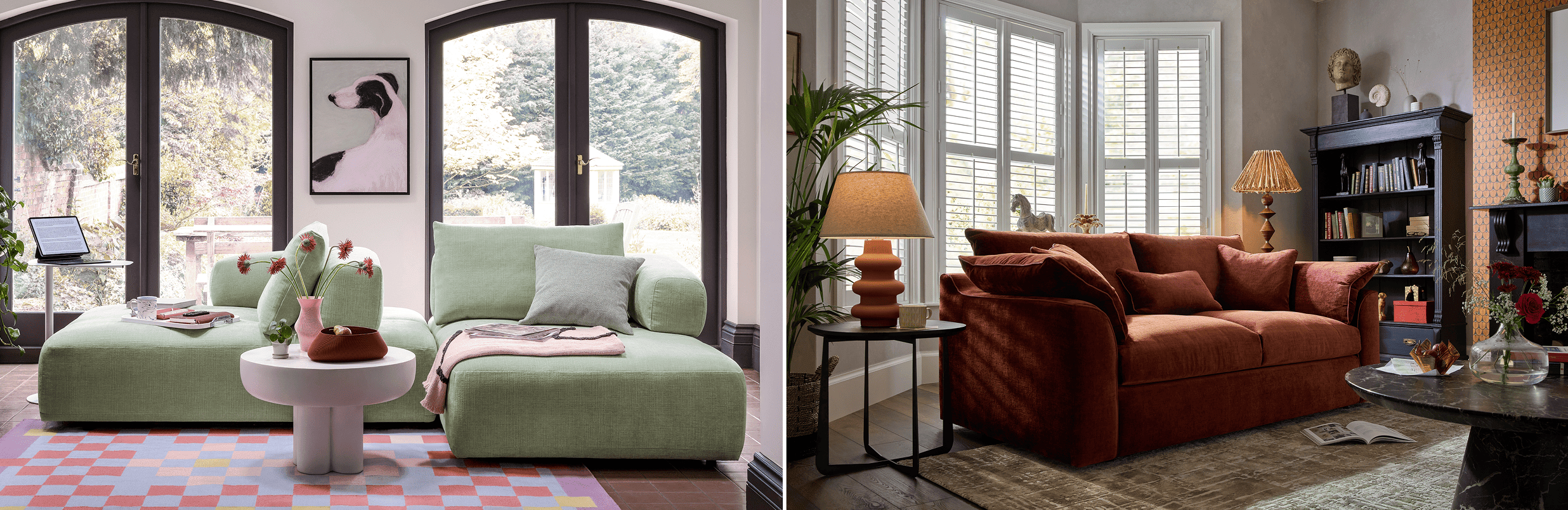
1. Anchor your layout around a focal point
Every well-designed room has a focal point - a feature that naturally draws the eye and gives the space a sense of purpose. This could be a fireplace, a large window with a view, a statement piece of art, or even the television.
Once you’ve identified your focal point, you can start arranging your furniture around it. This is the foundation of your living room furniture layout.
Position your main seating, like a fabric sofa, to face the focal point. If it’s a fireplace, arranging seating around it creates a classic, cosy hub. If it’s the TV, ensure the sofa is at a comfortable viewing distance. By giving your furniture a clear direction, you create a layout that feels cohesive from the start.
2. Create a sociable conversation zone in your layout
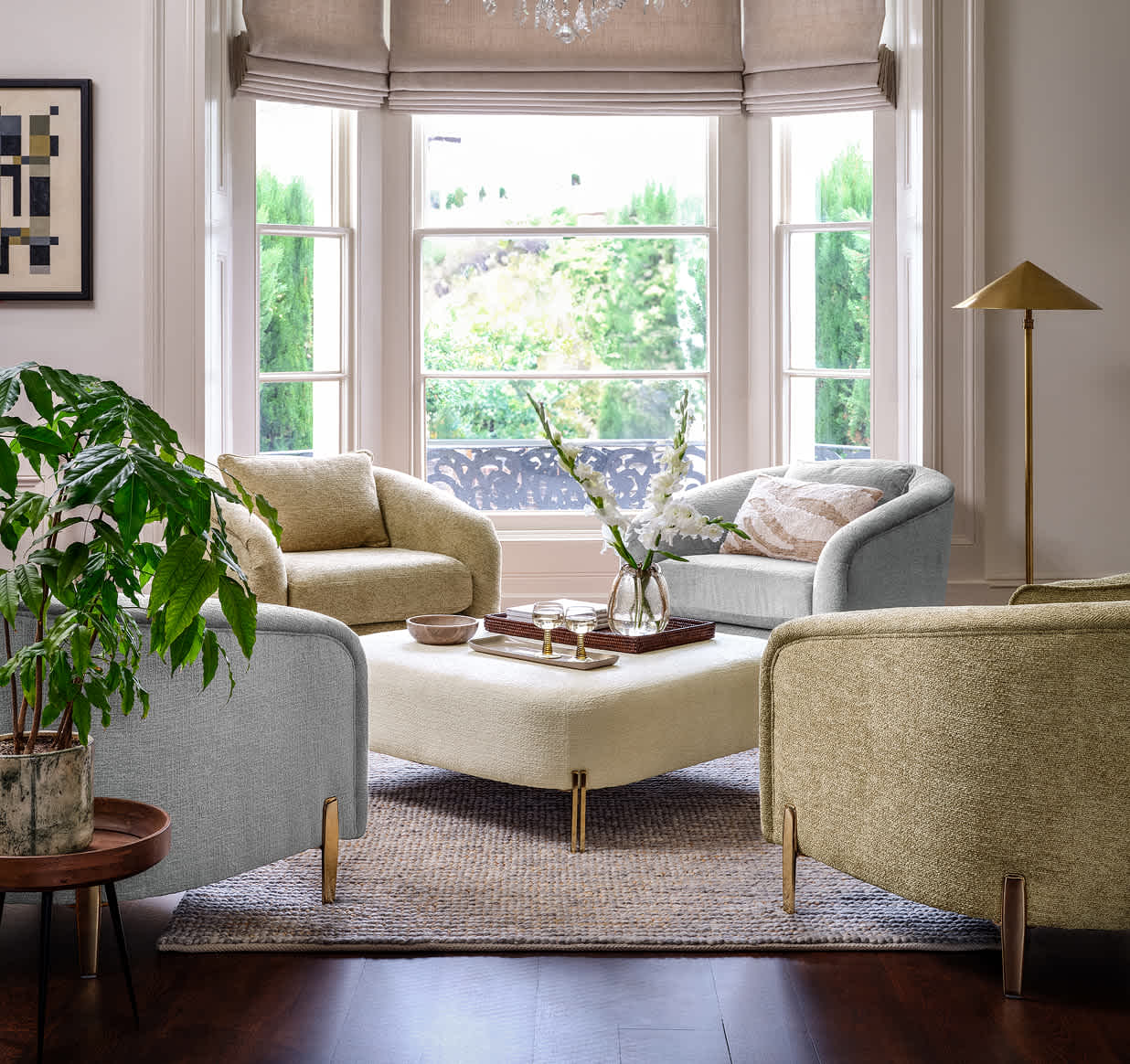
One of the most popular living room arrangement ideas is the conversation zone. This layout is designed to encourage interaction by placing seating in a way that allows for easy conversation.
Instead of placing your furniture in opposite corners, pull it together on one side of the room to create a more intimate and cosy living room layout.
An easy way to create a socialising zone is to place two sofas facing each other or pair your sofa with two armchairs opposite. Alternatively, if you love hosting large groups of people, we recommend using a corner sofa to define your conversation zone.
The key is to keep the seating close enough for conversation but far enough apart to allow for movement. As a guide, aim for a space in the middle that’s large enough for a coffee table but small enough that you don’t have to shout across it.
“A conversation zone turns a living room into a social hub. By arranging seating to face inward, you’re quite literally inviting connection. It’s a simple shift that makes the room feel warmer and far more intimate, whether you’re hosting guests or just spending time with family.”
Medina Adam, Buyer at Sofology
3. Prioritise flow and clear pathways
A functional living room layout takes into account how you move through the space. Before you finalise your furniture placement, think about the natural pathways from one doorway to another.
A common mistake is creating a layout that looks good but is frustrating to live with because it obstructs movement.
Ensure you leave clear walkways, typically around two to three feet wide, for the main traffic routes through the room. Avoid placing furniture in front of doorways or creating bottlenecks around key pieces like the sofa or coffee table. A layout with good flow makes the room easier to use and more relaxing to be in.
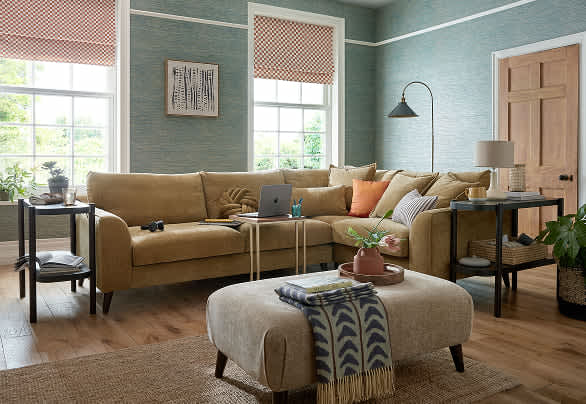
4. Try a ‘floating’ layout
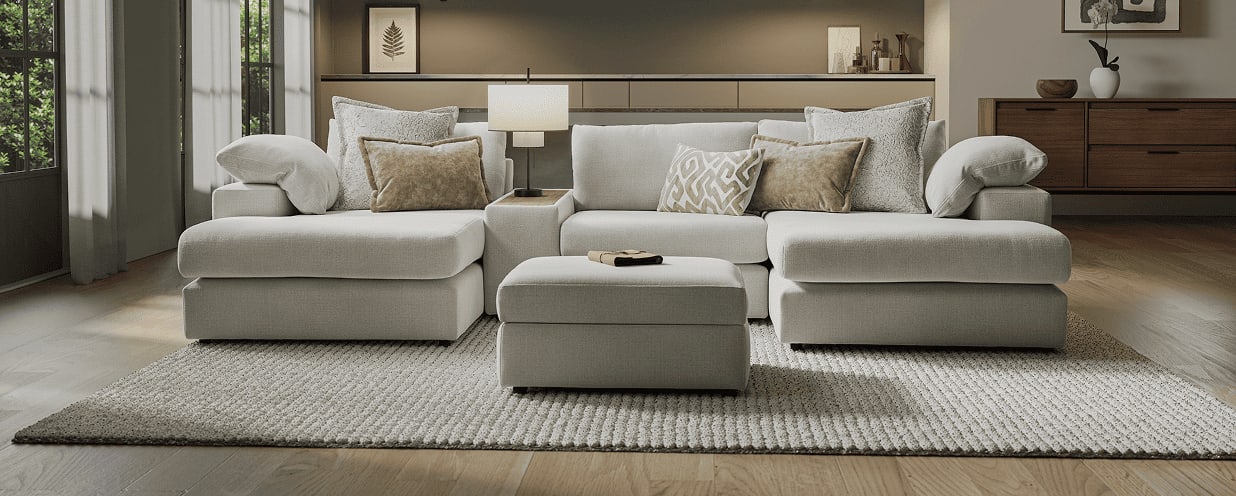
If you have a large living room, pulling your furniture away from the walls can make such a huge difference to the feel of the room.
This ‘floating’ living room arrangement idea involves grouping your furniture in the middle of the space to create a defined, island-like zone. We recommend this design particularly for long or rectangular rooms, as it breaks up the space and prevents your lounge from feeling like a corridor.
“Floating your furniture is a transformative technique. It creates cosiness, even within a larger space, and allows you to establish zones with clear purpose. We love this layout in long or rectangular rooms for making the furniture feel much more connected and less irregularly scattered.”
Medina Adam, Buyer at Sofology
5. Use rugs to define and connect
Rugs can help to anchor a floating living room layout furniture arrangement, visually connect different pieces, and define specific zones within a larger room. When choosing a rug, make sure it is large enough for at least the front feet of all main seating pieces to sit on it, as this helps create a more proportional look.
Another advantage of rugs is that they are easy to move, making it simple to update or rework your living room layout when needed. They also offer a great opportunity to tie your décor together.
For example, in a neutral living room, a textured rug can introduce warmth and help prevent the space from feeling flat. Or, in a multi-functional room, different rugs can be used to distinguish separate areas, such as defining a main lounge zone from a small dining space.
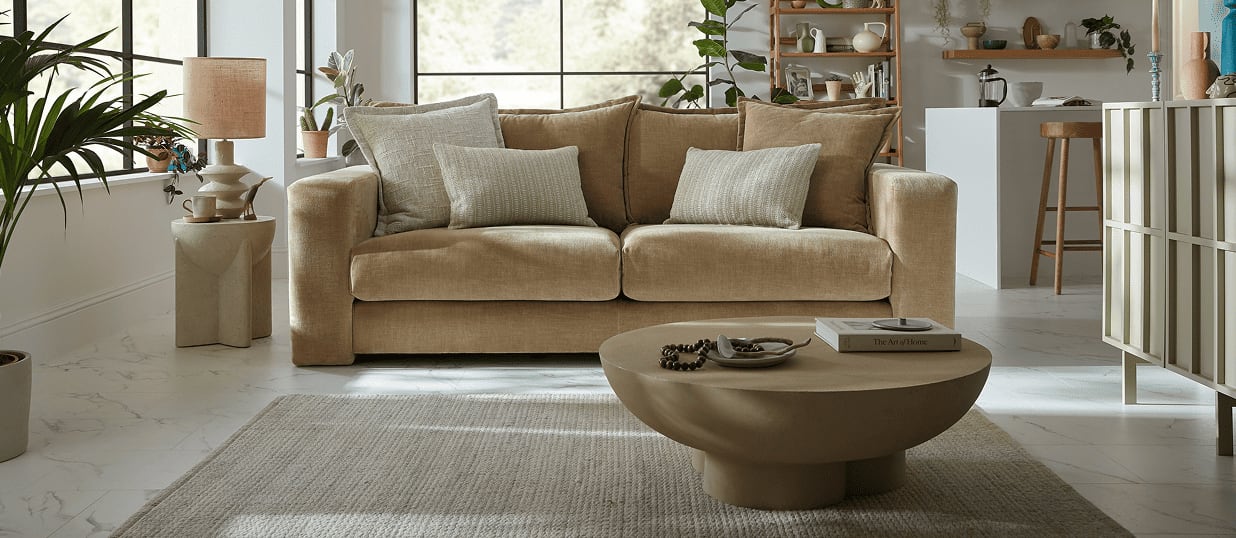
6. Balance the scale of your furniture with your layout
The best living room layout is one where the furniture is in proportion to the room itself and to the other pieces around it. A bulkier sofa can overwhelm a small room, while delicate furniture can get lost in a larger space.
Before you buy, measure your room and your potential furniture. Don’t forget to consider the visual weight of each piece. For example, a sofa with slim, elevated legs, like our Illinois sofa, will make your lounge feel airier compared to one with a solid base that goes right to the floor.
“Scale is all about the relationship between your furniture, your accessories, and the room itself. When the scale is right, the room feels harmonious and settled. Nothing jars or feels out of place, allowing the whole design to come together seamlessly. A practical tip is to balance your sofa with appropriately sized side tables and lighting. For example, a large sofa should be paired with taller floor or table lamps, rather than small accent pieces.”
Julia Bilotta, Creative Stylist at Sofology
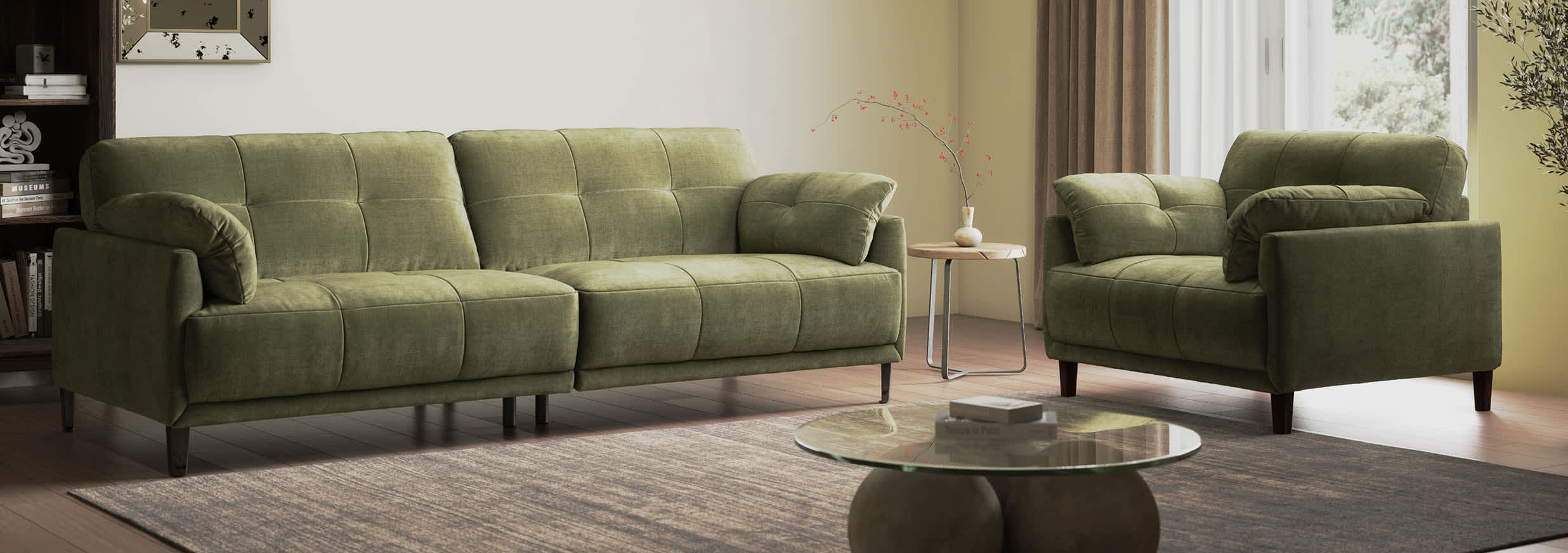
Ready to find the perfect anchor piece for your new layout? Explore our sofa collection to find the ideal centrepiece or visit the Sofological blog for more living room inspiration.